
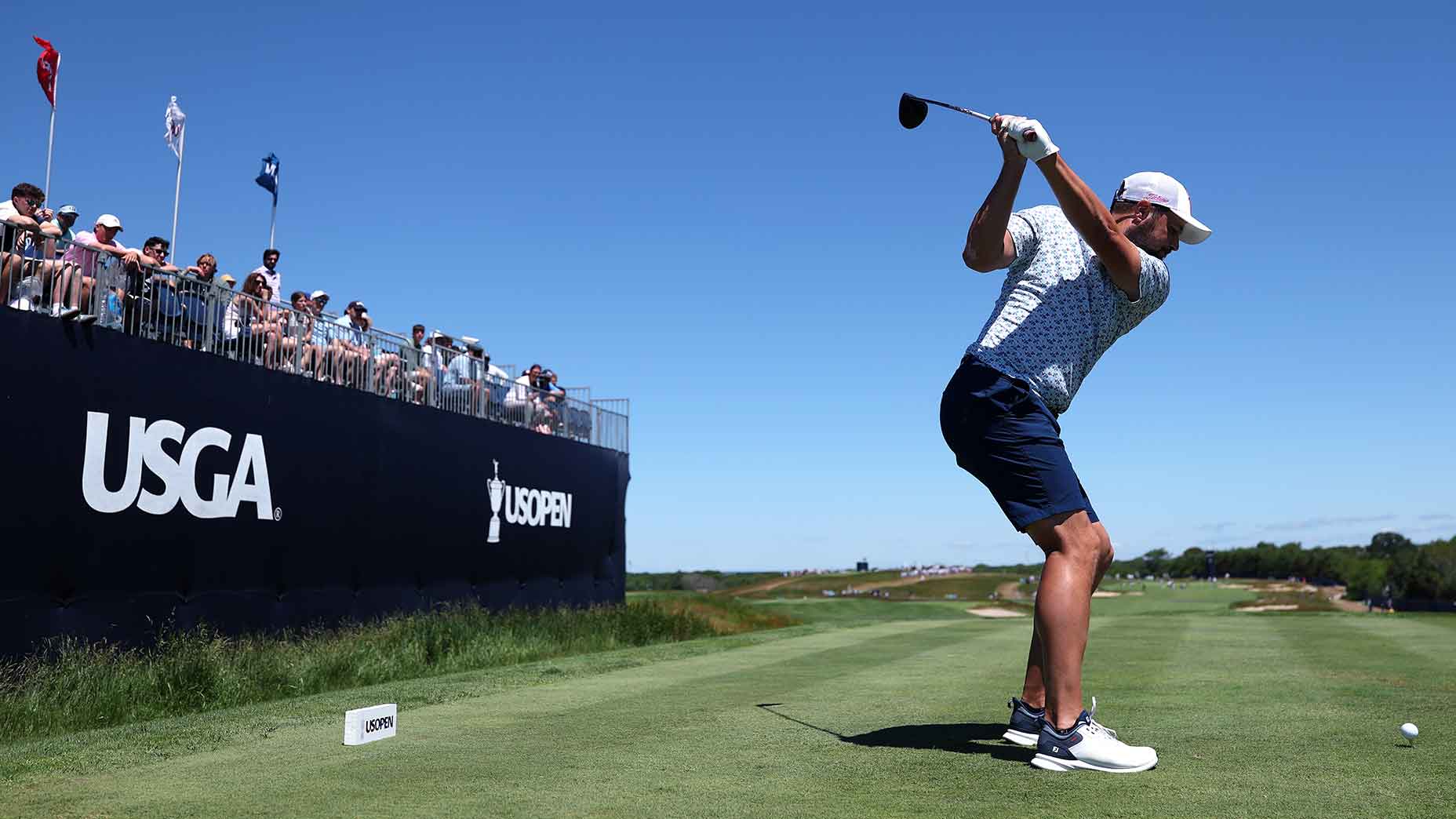
SOUTHAMPTON, N.Y. — Four of golf’s governing bodies released a joint statement Wednesday morning acknowledging plans to collaborate more than ever as they manage distance in the sport. In a rare display of harmony, the USGA, R&A, PGA Tour and DP World Tour all endorsed a shared path forward, shifting the approach on altering equipment used in the sport.
While the USGA and R&A have, for years, been working toward a rollback of the golf ball — proposing testing standards of how far a golf ball can fly under certain conditions — Wednesday marked the first time the PGA Tour and the DP World Tour stood alongside them.
Following recent collaborative meetings, the statement confirmed that, instead of a golf ball rollback arriving in phases — 2028 for professionals and 2030 for other golfers — a single-date implementation of January 2030 is best for all parties. The statement also suggested that the changes implemented on that January 2030 date may require more than just restrictions on golf ball launch. It could involve the shape of drivers and/or the thickness of a driver-face. It could involve rigid bifurcation of equipment between pros and ams. But on the eve of the U.S. Open, the statement no doubt leaves the distance debate in a bit of limbo. The runway for definitive decisions has officially been extended and the parameters of what’s possible widened.
“The R&A and USGA will take the appropriate amount of time to assess a range of possible options and determine the path forward,” the statement reads. “Specifically, the governing bodies will work closely with key stakeholders — including the PGA Tour, DP World Tour and their respective members — to review, test and implement options that have a meaningful impact on distance at the elite level. These efforts will ensure the elite game does not become too one-dimensional while continuing to emphasize the importance of shotmaking.”
Until this point, the PGA Tour (as well as many of its leading players) has cast doubt on the original, proposed golf ball rollback. It was during commissioner Jay Monahan’s 2023 return to work (following medical leave) that he declared the Tour could not support the Modified Local Rule the USGA was proposing.
The debate has roared up behind the scenes in 2026. Augusta National chairman Fred Ridley delivered a forceful defense for a rollback at his annual press conference in April, and Cameron Young was reported to be playing a golf ball that would conform to the USGA’s future specifications in May. Young is one of the top drivers in the game, and said at the PGA Championship that he did not notice much of a loss in distance — leading many to question if the proposed rollback would create its intended result. Or if the new standards would create greater losses of distance for different players, rather than a uniform loss of distance across the board.
Following the PGA Championship, the PGA Tour began quietly surveying its members for their thoughts on the distance debate, which was certainly a surprise to some at the USGA. The 13-question survey polled players for their thoughts on what has most led to increases in distance over the years, and if it is a problem for the sport. It also asked players if the Tour should have its own rule-making process, rather than those laid out by the USGA and R&A.
Not long later, USGA CEO Mike Whan spent Tuesday of the U.S. Women’s Open across the country in Dublin, Ohio, at the Memorial Tournament, where he met with the 16-player Advisory Council on this topic. Whatever took place in that meeting clearly had some effect on the proceedings, leading to Wednesday’s sudden announcement. Whan then held a press conference Wednesday morning, clarifying the future of this issue, at least from a USGA perspective.
Whan called himself a “glass-half-full” kind of guy, optimistic that recent meetings have allowed all (or most parties) feel like they’re at the same table. But he clarified that the original proposal may not have been significant enough in what it would do to curb distance gains. That it would be a “small, digestible bite” for everyone, considering that a Model Local Rule for the elite part of the game was maybe not going to be implemented by the leading tours.
Collaborating with the tours more actively, in theory, Whan said, could lead to changes that were previously dropped from consideration.


