
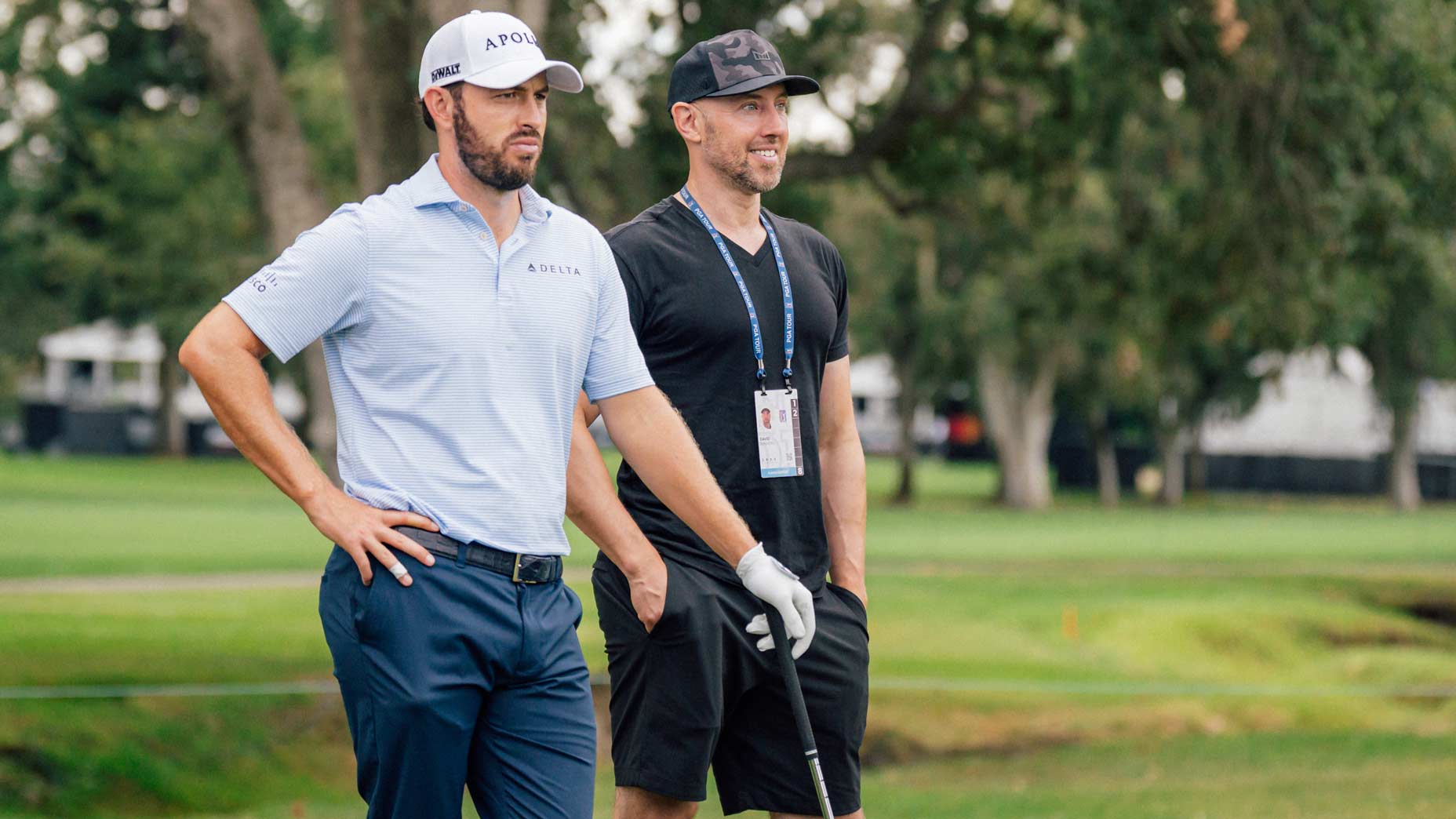
Golfers obsess over quick ways to gain speed — new drivers, swing tips, speed training, you name it. But according to David Sundberg, a strength and conditioning coach who works with multiple top-ranked PGA Tour players, such as Xander Schauffele and Patrick Cantlay, the best way to gain speed is by taking care of your body.
“The first thing we always want to do is keep players injury-free,” Sundberg says. “Once they’re healthy and moving well, that’s when we can start adding the performance stuff — and for most players today, that means speed and distance.”
Sundberg begins every new player — pro or amateur — in the same place: with a movement assessment. He looks at posture, hip and shoulder mobility, core stability, and how well a player can hinge, squat and rotate. Those patterns are the real foundations for speed.
If something’s tight or restricted, the body simply can’t produce power efficiently in the golf swing. It also makes you more injury prone.
“If the hips aren’t moving well, the lower back takes a beating,” Sundberg says. “If the upper back isn’t moving well, the lower back takes a beating. And if the upper back is tight, the neck or shoulders take a beating.”
One area he prioritizes above all: hip internal rotation. Without it, golfers can’t load into their glutes — and without that glute load, speed is basically capped.
“Hip internal rotation is super important,” he says. “If you can’t load your hips properly, you can’t produce maximum power.”
The simple way to unlock more speed
Before players ever step under a barbell, Sundberg has them get their body moving. A typical pre-round or pre-practice routine includes loosening the hips, activating the glutes, engaging the core, freeing up the upper back and stabilizing the shoulders.
That combination, he says, helps a golfer rotate more efficiently and creates the separation needed for producing clubhead speed.
“Once you mobilize something, you want to activate it so those gains stick,” Sundberg says.


Only then does strength training enter the picture. And the good news? It doesn’t need to be complicated. Sundberg trains Tour pros with basic, full-body movements — squats or lunges, hinging patterns, rows, presses, core work and a bit of rotational or med-ball power.
“You can strength-train anyone with anything as long as you can progress it over time — make it heavier, harder, more challenging,” he says.
Sundberg likes to remind people that even though the pros he works with like Schauffele and Cantlay can bomb the ball 300+ yards off the tee, they aren’t superhuman.
“They’re just people,” he says. “Their bodies aren’t necessarily better — they’re just incredibly skilled at hitting golf balls.
The takeaway? The things that hold back Tour players are the same things slowing down recreational golfers — tight hips, limited rotation, weak glutes, unstable cores. And the path to fixing those things is similar.
How often should you train?
If you’re not doing any gym work, Sundberg says even one or two sessions per week will help. But for golfers who really want to see meaningful speed gains, three sessions per week is the sweet spot.
Even better: pair that gym work with a short warm-up before practice or a round. Five minutes is enough to get the body moving the way it’s meant to.
In the end, Sundberg says the formula for more speed is refreshingly straightforward: better movement leads to better loading, better loading leads to more force, and more force leads to more clubhead speed.
“Whether you’re a Tour player or a recreational golfer, the principles are the same,” he says. “Move well, get strong, and the speed will come.”


