Ask any teacher what they consider the worst advice in golf, and there’s a good chance they’ll share a phrase you’ve heard before: Keep your head down.
It may have started as a harmless, simple tip to help new golfers stop topping the ball, but over the years it’s become a crutch that can have lasting negative effects in your golf swing. And it was a trap that Harry Francis had fallen into which led him into a GOLFTEC.
Francis’s average score was consistently over 100 — usually in the 105 range — which was surprising. He was one of those golfers whose swing looked better than his scores.
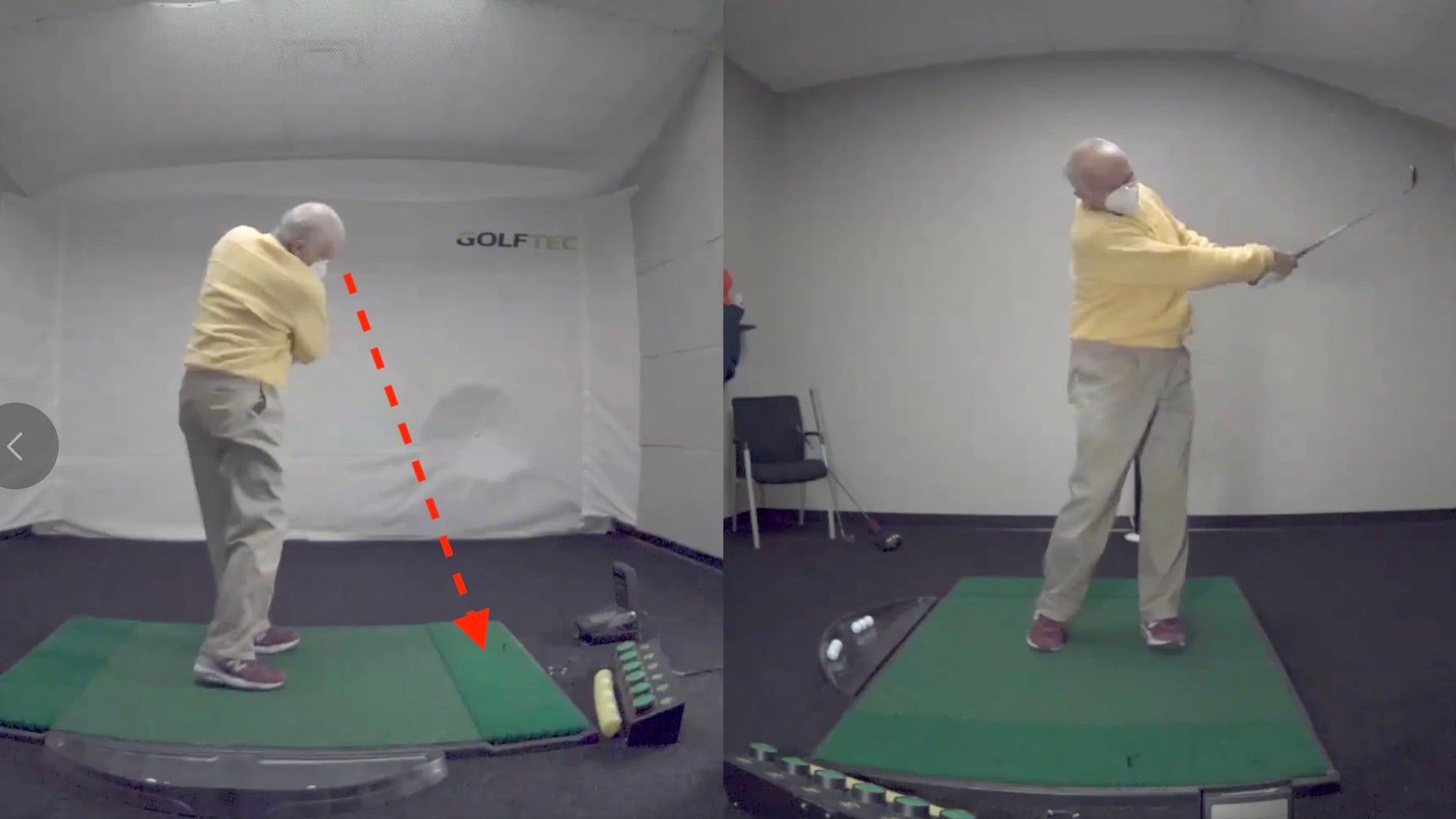
“Harry has a really nice backswing relative to players who shoot over 100,” his GOLFTEC coach Greg Warfel said. “It was the later parts of the downswing and the early parts of the follow-through that were his demise…they were radically different than how a better player moves.”
Specifically, Harry’s arms were too bent at impact, which caused a chicken wing in his swing. It was costing him power and consistency. Either his arms would be too bent, and he’d catch the ball thin, or they’d be too straight and he’d chunk the ball. The cause of this, Warfel said, quickly became clear.
“Harry was trying to keep his head down after impact, which is the worst advice typically given in golf,”
DON’T keep your head down

Swing Evaluation for GOLF.com Readers!
The main reason why teachers hate the keep-your-head-down advice is because it restricts your body’s ability to turn through. If your head is down, your body keeps moving, and your arms run out of space. So, you end up flipping at the ball with your hands and chicken wing-ing. Both moves are heavily timing-reliant and hard to repeat.
So, that’s what the pair set about fixing: Helping keep his chin up and head turning toward the target on his follow-through, which helped straighten his arms and improve his torso rotation through the ball.
“Harry didn’t really understand the relevance of his follow-through and the implications that resulted in form that would negated all the really nice style of his backswing and downswing,” Warfel said. “Explaining how the movement after the ball related to improving his ball striking was the most important time we’ve spent together.”

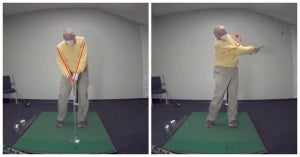
Last summer, he shot his best round ever: an 88, and he’s working on improving it with some minor tweaks to his backswing to get his scores even lower — even though he’s still flying high from his new move.
“It has transformed my swing and given me back distance,” he said.