
Welcome to Shaving Strokes, a GOLF.com series in which we’re sharing improvements, learnings and takeaways from amateur golfers just like you — including some of the speed bumps and challenges they faced along the way.
When amateurs find themselves facing shots around the green, many default to always using the same club, regardless of the scenario.
For example, I’m notorious for favoring my 60 degree (or lob) wedge, thinking a high, soft flop shot gives me the best opportunity to score. But this isn’t always the case. In fact, many times, a lower-lofted club is a higher-percentage play.
Since we all want to go as low as possible, one of the first steps to improving is shoring up your short-game strategy. So instead of using the same club, the same type of stroke, or the same setup, try experimenting with different kinds of shots.
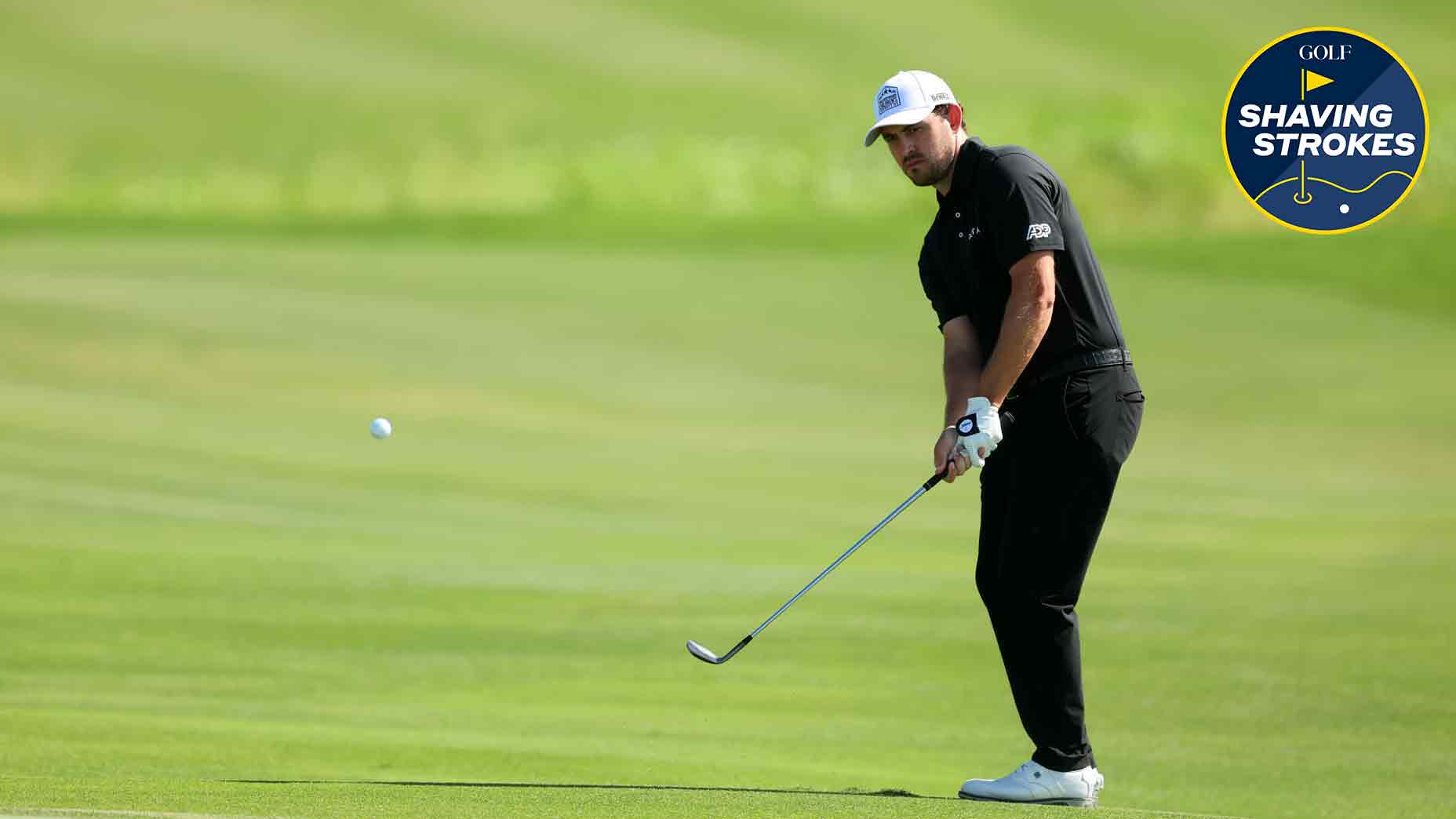
One of those shots is a simple bump and run, which is what GOLF Top 100 Teacher Jamie Mulligan teaches many of his students to use around the greens, including stars Patrick Cantlay and Nelly Korda.
While hitting a high, crispy wedge shot may feel great and can build confidence, it can be risky. Should just one thing go wrong, the entire hole can get away from you. That’s why using a bump and run is a great alternative — especially since it’s much easier to master shots on the ground versus in the air.
So how can you hit a successful bump and run like Cantlay and Korda? Mulligan explains below, so see why it can be a great (and smarter) option for you during your next round.
How to play the bump and run, according to Mulligan
I started coaching on Tour 30 years ago. Back then, most players would basically hit a 56-degree wedge shot from around the green, using lots of flange (or what we call bounce these days). It would always produce a flop shot or a high pitch shot from various spots near the putting surface.
These days? Most pros and high-level amateurs are using a simple bump and run instead, understanding that it gives them so many bites of the apple.
Not only does this type of shot help your short game become more effective around the greens, but it’s also versatile enough to play it off different types of lies as well. Plus, when using the proper technique, a bump and run helps many different parts of your game — inclusive of putting, ball control and pace.
Two players I coach, Patrick Cantlay (ranked No. 7) and Nelly Korda (ranked No. 2), are among the best at executing this type of shot. So it’s no surprise that both Cantlay and Korda have been close to leading in Strokes Gained: Around the Greens over the past few years. Both use the bump and run expertly, which you can see in the video below from Cantlay’s hole-out at the 2023 FedEx St. Jude Classic.

Here is the way to play it. First, treat both the shaft and lead arm as one unit. Next, move the ball position slightly back in your stance. Finally, when you start your backswing, keep your weight on the lead leg.
The idea is to make a short backswing and use the whole club, helping trap the ball against the turf. So as you come through impact, fly the ball to an area before the green, letting the club naturally move through — which gives texture to the shot and allows the ball to roll out.


As mentioned earlier, both Cantlay and Korda have excellent short games. If they hit 10 shots using their lob wedge and then another 10 using a bump and run, the dispersion from the latter will always be closer.
Additionally, something about the forward progress of the shot (when hit the right way) is helpful for all levels of golfers. By having the shaft slightly in front of the ball at impact, you’re able to compress the ball and make the contact you’re looking for from around the green.
So ditch the flop shot from around the greens and start using more bump and runs. It could become the secret weapon that helps unlock better results and better swing fundamentals for nearly every club in your bag.


