Let’s get right to the meat of the matter.
We’re here to share some tips on how to sear a steak.
For insights, we’ve turned to James Tripi, Director of Culinary Operations at Driftwood Golf and Ranch Club, a luxe private residential community, in Texas Hill Country outside Austin, that is home to an 18-hole Tom Fazio design.
At once rural and refined, the club sits amid rolling ranch land, and its culinary programs are closely connected to its surrounds.
Chef Tripi’s menus are farm-to-table, inspired by ingredients that shift with the seasons, though this much never changes: you can always get a superb steak.
Steak is a catchall term for different cuts of meat: rib-eye, T-bone, flat iron, and on. Chef Tripi’s preferred cut is a Porterhouse, and his preferred cooking implement is a cast iron pan, in part because cast iron pans retains heat so well. What’s more, they’re versatile. When you sear a steak in one, you can do so on the stovetop, or on an open fire or grill.
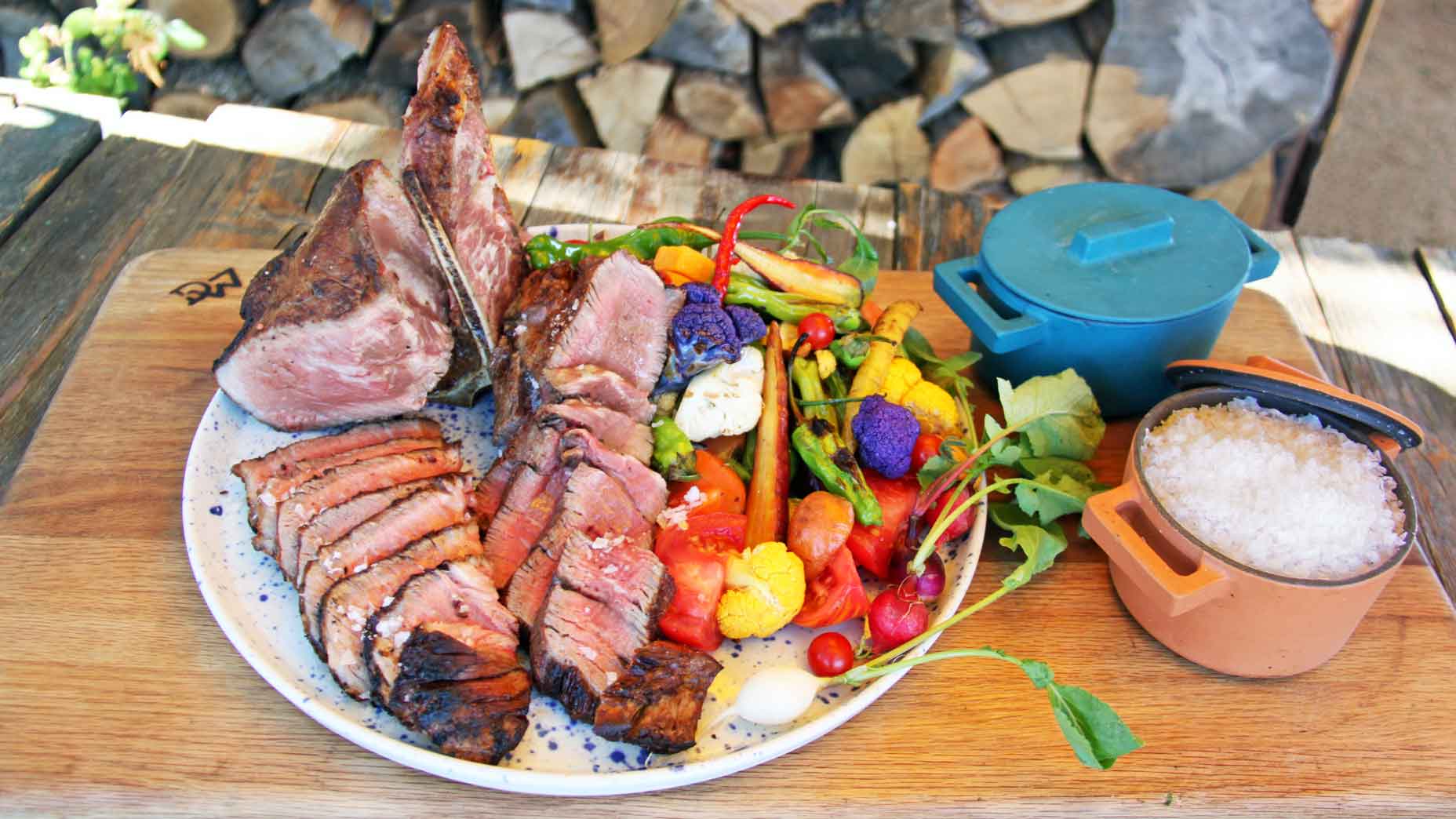
Size matters to Chef Tripi. He favors a 42-ounce Porterhouse, a honking cut of meat, perfect for sharing, a steak fit for a celebratory family meal. During the last minutes of cooking, he bastes the meat in butter and aromatics, then flanks it with farm-fresh ingredients, like heirloom tomatoes, grilled ramps, purple cauliflower, you name it — whatever items are at their seasonal best.
Those are the basics. But there’s more to it. Here are Chef Tripi’s pointers for pan-searing a Porterhouse, which also work for other steaks, though cooking times may vary, depending on the thickness of the cut
1. Buy High Quality Meat
A great steak starts with great meat, so get the highest quality you can find. And remember: fat is flavor. The more marbled the steak, the better tasting and more tender it will be.
2. Dry, Temper and Season
Moisture is the enemy of the perfect sear. Prior to cooking, pat the steak dry with paper towels and set it on a rack over a plate in the refrigerator for an hour to an hour-and-a-half. If any moisture has accumulated on the meat when you take it out, pat it dry again, then leave it out at room temperature for 30 to 45 minutes; if you throw your steak in the pan straight out of the fridge, it will be too cold to cook evenly. When it’s time to season, Chef Tripi suggests keeping it simple: a light brush of olive oil, salt and pepper. You want the flavor of the beef to shine. Wait to season until right before you start cooking, as the salt will draw moisture out of the meat if you let it sit too long.
3. Prepare Your Pan
Heat the pan over medium high-heat (if the pan is too hot or too cold, you’ll either get a blackened steak that’s cooked unevenly, or an unevenly cooked steak with no sear at all), add a drizzle of olive and, when the oil starts to smoke (this will happen quickly) it’s go time.

4. Sear the Steak
Cooking times vary depending on the thickness of the cut. But for a medium-rare Porterhouse, plan on 8-10 minutes per side, flipping the steak halfway through the cooking. If the steak seems to be browning too quickly, lower the heat, and vice versa if you’re not getting enough caramelized crust.
5. Finish the Steak
Once you’re on the flip side, you’re at the fun part. During the last 2 to 3 minutes of cooking, take the pan off the heat and add 1-2 tablespoons of butter, along with thyme, rosemary, smashed garlic cloves, sliced shallots — any aromatics that suit your taste (take care: if you add the butter too early, while the pan is on the heat, it will burn). When the butter melts, tilt the pan and use a spoon to baste the steak, allowing the flavors to infuse the meat.
6. Rest Steaks
When your steak is glistening brown, with a caramelized crust on both sides, you’ll be tempted to eat it. Don’t. Not yet. If you cut into it right away, you’ll loose precious juices. Instead, transfer it to a plate, loosely cover it with aluminum foil and set it aside for about 10 minutes. Letting the steak rest allows its juices to settle and spread evenly into the fibers of the meat. Juicy steak with every bite.
7. Slice and Serve
Slicing isn’t pretty on the golf course. But done right in the kitchen, it’s a beautiful thing. The simple rule is this: cut your steak against the grain, so that you’re slicing through the muscle fibers and shortening them, not slicing in the same direction that they run. When you bite into the meat, it will be all the more tender, because the carving knife has already broken up the fibers, leaving your teeth with less work to do.