Welcome to Clubhouse Eats, where we celebrate the game’s most delectable food and drink. Hope you brought your appetites.
***
A lot of cocktails have clever names that tell you little about what’s in them.
Then there’s the gin and tonic, a classic with the confidence to show its cards up front.
Gin. Tonic. A spirit and a mixer. That’s pretty much it.
Still, there are nuances.
Shaun Lewis is a classically trained chef and cocktail master who serves as general manager at Old Westbury Golf & Country Club, on Long Island.
With summer approaching, we asked him for tips on doing a gin and tonic right.
The Right Ratio
Mostly, it comes down to taste. But Lewis makes his with 2 ounces of gin and 6 ounces of tonic. He says that 1-to-3 ratio is a good rule of thumb.
The Right Tonic
The better the ingredients, the better the cocktail. There’s a lot of garbage out there. Go with high-quality tonic water, free of junky additives and with finer bubbles that help the effervescence last.

The Right Glass
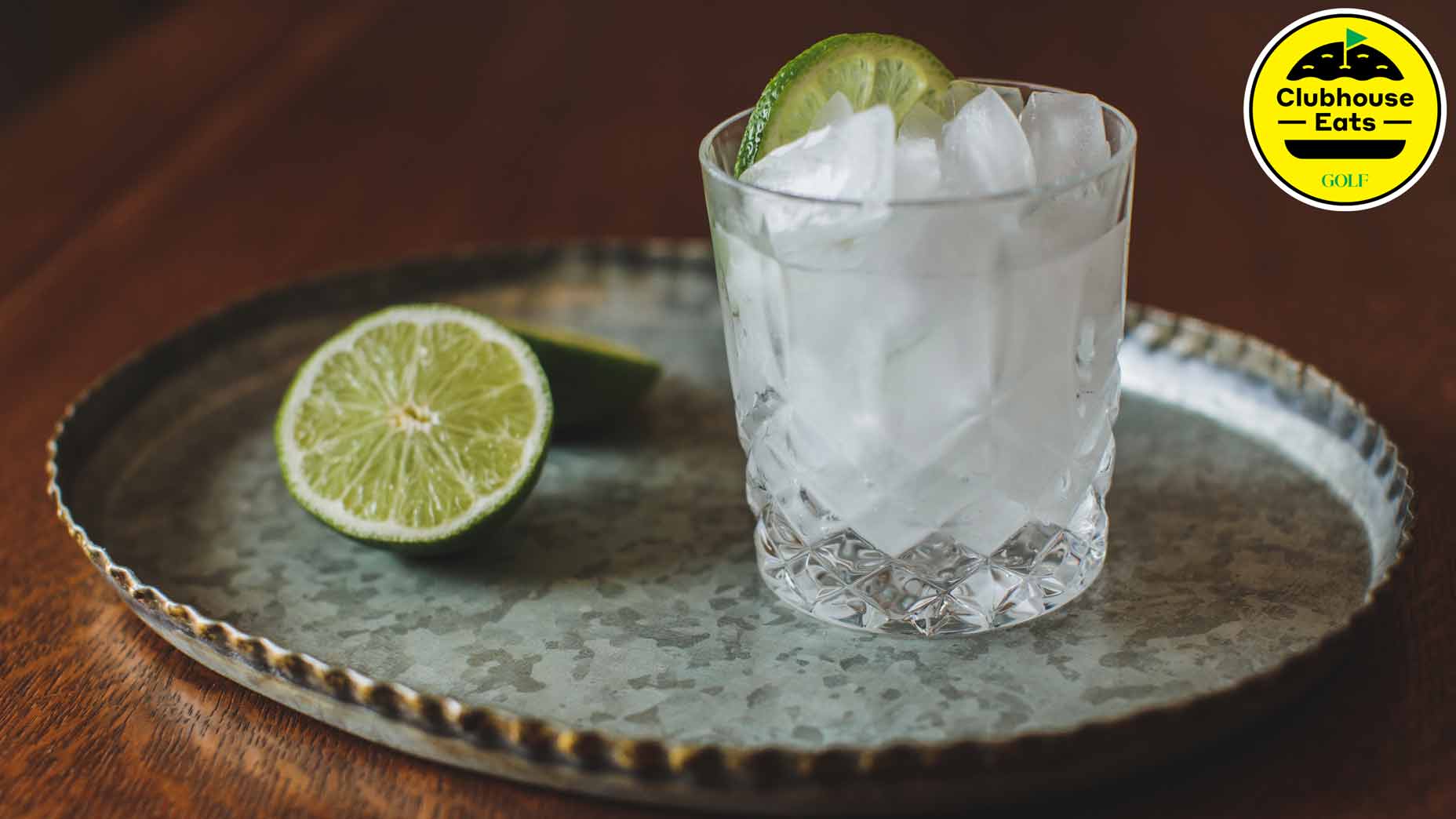
A collins glass is the traditional vessel and with good reason. Tall and narrow, it limits the chance of the cocktail bubbling over the rim.
The Right Ice
Large, solid cubes, please, not shavings, so the ice doesn’t melt quickly and dilute your drink.
The Right Pour
First the ice. Then the gin. Then the tonic. Do not stir. That only breaks up the bubbles, letting the effervescence out.
The Right Garnish
A lime wedge ought to do it. Lewis likes to squeeze the lime then toss it in the drink. But if you prefer, there’s nothing wrong with leaving the wedge on the rim.
The Right Gin
The gin and tonic traces its origins to 19th-century India, where British officers drank quinine to combat malaria. To make the quinine more palatable, they added gin. “With most cocktails, the mixer was added to make the booze taste better,” Lewis says. “In this case, it was the opposite. They added booze to make the mixer more palatable.” The gin they drank back then was piney and astringent, a classic profile that lives on today in gin styles such as London Dry and Plymouth. Lewis loves those, but he’s open-minded. “Nowadays, it’s really a matter of preference,” he says. “Go with the style you like best.”