There is a distinct lack of vanity on the Srixon tour truck.
Walk into the equipment space at any signature event this season, and the talk of the gear community invariably centers around the brand’s rapid takeover of the iron category. The crisp lines of the ZXi series have captured the imagination of golf purists, but focusing entirely on Srixon’s iron success invariably misses the mark on the foundation of that success.
The real, unheralded hero of Srixon’s 2026 PGA Tour campaign isn’t cutting through the turf — it’s flying through the air.
Srixon’s premium ball franchise has quietly undergone an incremental, highly calculated evolution to meet the precise aerodynamic and spin demands of modern tour fields, cementing its status as the ultimate weapon for players who make their living within the 175-yard scoring envelope. Make no mistake, off the driver and long clubs it’s as strong as anything out there, but where I find the Z-star magic to be is in the mid-irons and around the greens.
Take a look at how Srixon’s tour staff is utilizing each of the company’s Z-Star golf ball options to their advantage.
Cracking the mid-iron compromise: The Z-Star Diamond
For a long time, elite ball-strikers faced a frustrating compromise. If they wanted a ball that cut down on driver spin to maximize efficiency off the tee, they often had to sacrifice the vertical holding power required to stop mid- and long-irons on firm, tucked pins.
The development of the Z-Star Diamond effectively erased that compromise, and its validation across the 2026 season has been impossible to ignore for players like J.J. Spaun. Before finding the Diamond, Spaun bounced between models because standard options either ballooned in the wind or dropped out of the sky too early on mid-irons. By pairing the Diamond’s unique high-iron spin profile with his progressive cavity-back setups, Spaun has secured an incredibly stable launch window that holds its line regardless of crosswinds.
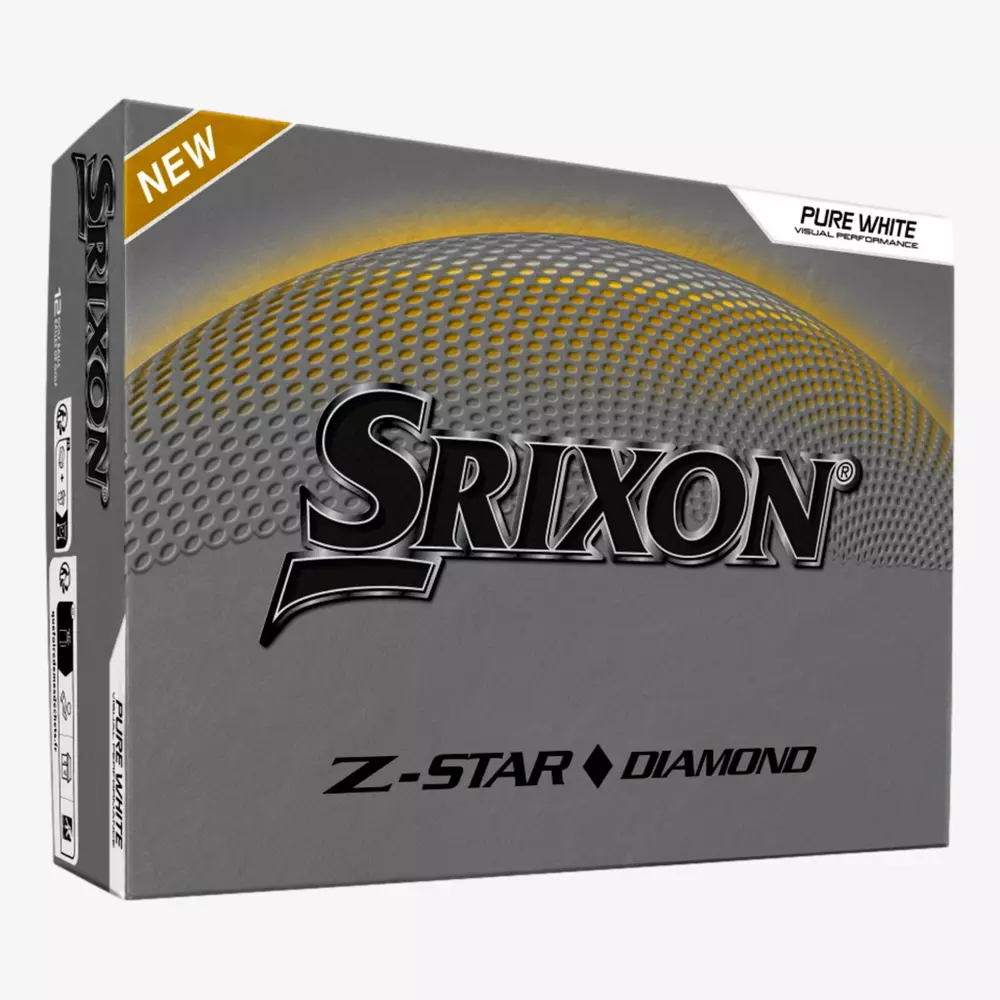
Srixon Z-STAR DIAMOND
With a blend of greenside control and long-game distance, the new Z-STAR ♦ DIAMOND also delivers the unique benefit of increased spin on long and mid Iron shots.
A similar story of precision engineering over marketing hype played out for Nico Echavarria. When Echavarria made the strategic switch to the Z-Star Diamond at the beginning of the year, he was searching for a tighter launch window on demanding course designs.
That search was validated in dramatic fashion at the Cognizant Classic on PGA National’s notorious Champion course. Facing heavy, switching coastal winds and forced carries over water, Echavarria put on an absolute ball-striking clinic, gaining over 8.5 strokes on the field via approach shots and short-game scrambling.
The ball didn’t balloon into the breeze or skip past the pin on long-iron approaches; it held its trajectory seamlessly, validating the Diamond’s design intent of delivering high iron spin without sacrificing high-velocity distance off the tee.
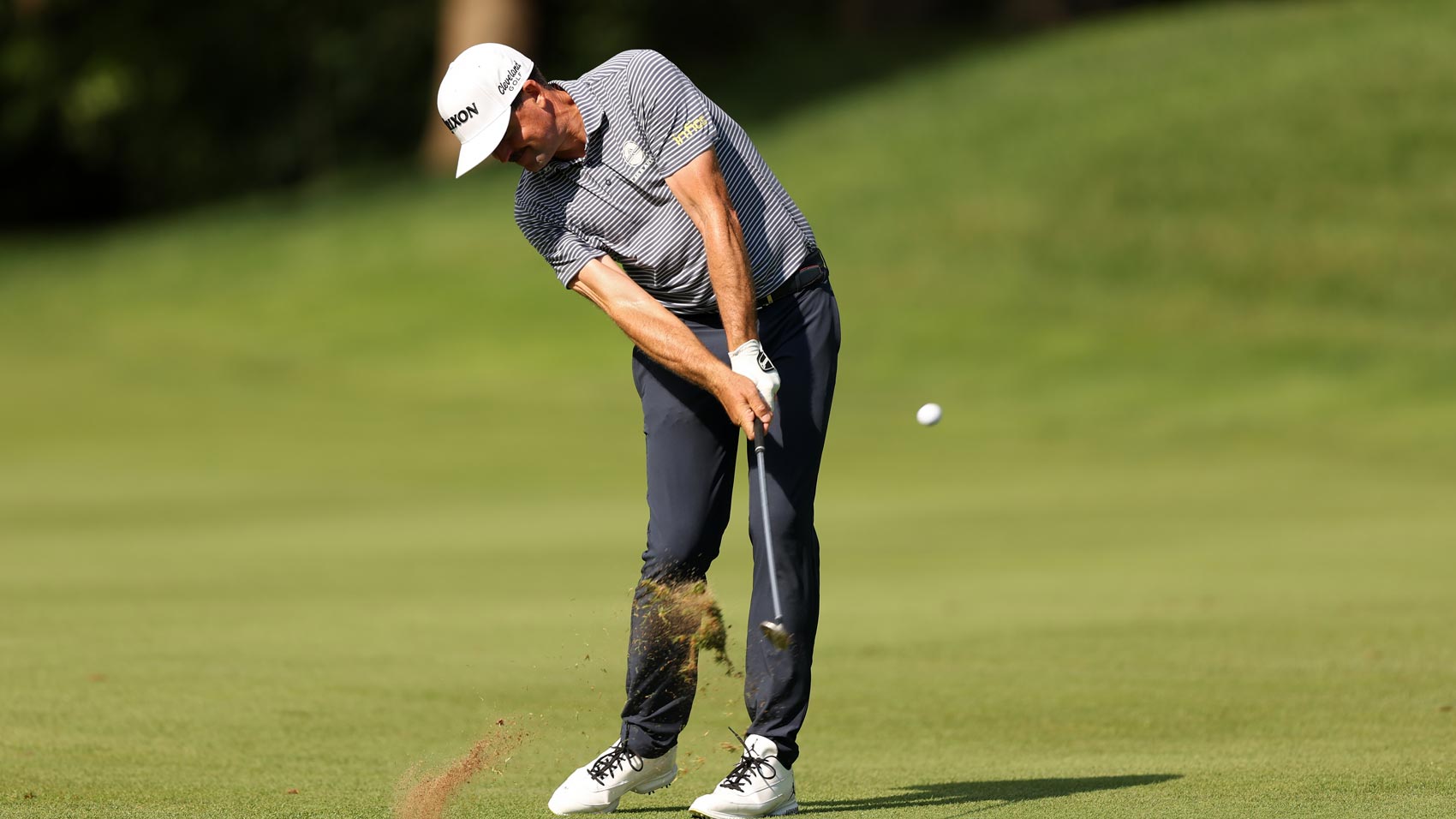
The validation of the Diamond profile isn’t limited to guys looking for more spin; it’s also the bedrock for players who hit it with maximum velocity. Keegan Bradley relies heavily on the Z-Star Diamond to anchor his characteristically aggressive compression profile.
As one of the tour’s most intense ball-strikers, Bradley’s heavy, downward strike requires a ball that can withstand incredible shear forces off the iron face without shedding necessary flight stability. The Diamond hits his precise parameters by delivering high-spin stopping control on full iron shots while offering a crisp, clickable acoustic feedback around the greens that lets him navigate demanding tournament pins with immense touch.
An equally compelling case for Srixon’s core stability can be found in the consistent rise of Andrew Novak. Armed with the Z-Star Diamond, Novak has carved out a highly disciplined season anchored by five top-25 finishes. For Novak, the Diamond provides a reliable buffer against changing tournament conditions, allowing him to optimize his iron launch vectors and execute short-iron approaches with immense control over the ball’s final roll-out out of varying cuts of grass.
High velocity and visual windows: Staying in the XV
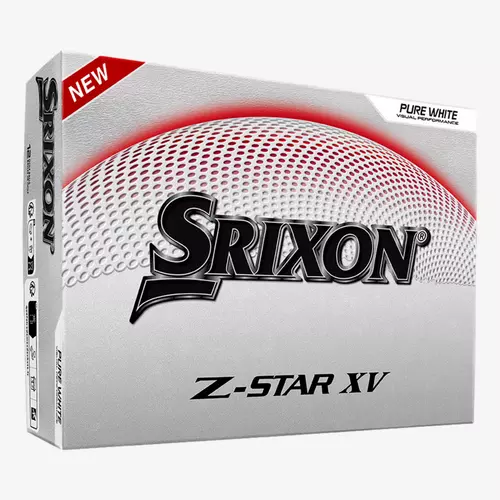
Srixon Z-STAR XV
Z-STAR XV provides maximum ball speed for unmatched Driver and Iron distance. Its premium 3-piece construction gives skilled players complete tour performance, tee to green.
On the firmer, maximum-compression side of the lineup sits the Z-Star XV, a ball engineered to withstand heavy, high-speed impact while maintaining micro-targeted predictability.
Sepp Straka has ridden this specific platform to an incredibly consistent 2026 campaign, highlighted by a runner-up finish at the AT&T Pebble Beach Pro-Am and making10 cuts in 14 starts. Straka, known for his exceptionally straight and disciplined ball flight, utilizes the XV to establish a bulletproof baseline where his miss-hits stay within manageable parameters. Even during demanding stretches on firm greens, the XV’s aerodynamic consistency kept him inside the top tier in virtually every ball-striking metric, ensuring that a slight strike variance didn’t translate into a missed weekend.
The dynamic nature of these tour-level ball validations was perfectly illustrated on the grandest stage at the U.S. Open at Shinnecock Hills.
On paper, Straka’s profile makes him the quintessential candidate for the Z-Star Diamond. He delivers a pristine, repeating compression strike that would naturally benefit from the Diamond’s elevated iron-stopping power.
Seeking to maximize vertical stopping control on Shinnecock’s notoriously glass-like, perched greens, Straka actually put the Z-Star Diamond in play for the opening round, turning in a respectable 72. However, after a challenging second-round 75 that led to a missed weekend, the strategic realization became clear.
Because Straka naturally flights a flatter, piercing draw with virtually every club in his bag, the Diamond pushed his peak apex slightly outside of his visual comfort zone. He immediately swapped back to his familiar Z-Star XV for his next start at the Travelers Championship.
The lower-spinning, wind-cutting XV immediately restored his ball flight to the exact trajectory window he needs to see. It stands as a perfect case study of how crucial visual launch windows are at the elite level—where a minor variance in peak height can completely disrupt a player’s shot imagery.
Uncompromising standards from 175 Yards and in
When analyzing elite precision on the PGA Tour, Hideki Matsuyama remains the ultimate gold standard for meticulous gear selection. Matsuyama is notoriously uncompromising about his equipment specifications, demanding a golf ball that produces instant auditory feedback and unmatched ball speed off the face, combined with complete predictability around the greens.
Relying on the firm, wind-piercing profile of the Z-Star XV, Matsuyama has put together an incredibly resilient 2026 season. His trademark aggressive compression requires a ball that can withstand incredible shear forces. The XV’s proprietary Spin Skin+ coating — a specialized high-friction layer that digs deep into wedge grooves — ensures that his launch angles and spin rates remain perfectly uniform, fueling his top-tier rankings in both approach play and greenside scrambling all season long.
That identical reliance on predictable flight and elite short-game feedback is shared by Shane Lowry and Ryan Fox, two wind maestros who rely on heavy compression to cut through harsh conditions.
Lowry’s world-class short game relies entirely on low, checking wedge shots that require immediate friction on the second bounce. He currently ranks among the elite on the PGA Tour in Strokes Gained: Approach, a stat heavily aided by Srixon’s proprietary Spin Skin+ coating. This micro-engineered, high-friction urethane layer allows the ball to deep-engage with wedge grooves on partial shots, giving Lowry that signature stop-on-a-dime control without altering his launch profile on full iron swings.
Fox similarly utilizes the XV’s low-drag design to maintain a piercing trajectory over long distances, trusting that his high spin rates on short approach shots will transfer seamlessly into controlled drop-and-stop behavior on the putting surface.
Perhaps the ultimate validation of Srixon’s engineering philosophy is Lucas Glover, a player who famously operates without a restrictive, full-bag equipment contract. Every single piece of gear in Glover’s bag has to earn its spot based strictly on raw data and personal performance.
Glover has long been one of the premier ball-strikers on tour, consistently ranking near the top of the field in Proximity to the Hole from the critical 150-to-175-yard zone. He pairs the Z-Star XV with his choice of precision cavity-back irons because it provides a firm, clicking acoustic profile that gives instant feedback, while the FastLayer Core — which features a progressive compression gradient that is soft in the center and firm on the edges — ensures uniform energy transfer.
When you are attempting to drop iron shots inside a 30-foot circle from the rough on Sunday afternoon, a fraction of a percent of variance in ball manufacturing can ruin your tournament. Glover’s continued reliance on the XV proves that Srixon’s evolutionary, detail-oriented approach to ball manufacturing isn’t just keeping pace with modern equipment—it is quietly setting the tour standard for competitive reliability.
By The Numbers: The decisive 2026 tour data
When you move past subjective feel and look strictly at the advanced metrics compiled across the 2026 season, the statistical footprint of the Z-Star lineup reveals exactly why it is winning the battle of the margins. The tour is won by eliminating variance, and the micro-data from approach play and greenside scrambling highlight a distinct pattern of efficiency among Srixon staffers.
In terms of pure approach consistency, Sepp Straka’s iron play has been pristine. Powered by the low-variance aerodynamic profile of the Z-Star XV, Straka has gained a remarkable 0.696 strokes per round on the field in Strokes Gained: Approach, a premium metric that places him 15th on the entire PGA Tour. Behind that number is an exceptional accuracy rate from the fairway and intermediate cuts, where the ball’s compression window translates directly into micro-targeted distance control.
Keegan Bradley has backed up his heavy strike with robust baseline execution. Over recent multi-tournament stretches, Bradley has displayed immense approach upside, gaining an impressive 0.451 strokes per round in Strokes Gained: Approach during his most locked-in ball-striking stretches. He pairs that with elite touch around the complexes, picking up 0.260 strokes per round around the greens to rank 28th on the entire tour.
Hideki Matsuyama has backed up his meticulous testing with staggering scoring metrics. Matsuyama ranks 27th on the PGA Tour in Strokes Gained: Approach with an impressive 0.403 mark per round, showcasing his surgical mid-iron precision. More impressively, his short-game control has been near the top of the field, ranking 19th on tour in Strokes Gained: Around-the-Green (0.328).
Shane Lowry matches this relentless standard inside the scoring zone, capturing a stellar 0.412 average per round in Strokes Gained: Approach to solidify his rank at 26th on tour.
The data is just as telling when evaluating the short-game and scrambling metrics for the rest of the staff. Andrew Novak has turned the Z-Star XV into a scoring shield, operating at a premium tier around the greens. Novak currently sits inside the top 75 on the PGA Tour in overall Strokes Gained: Around-the-Green with a steady 0.111 mark. More impressively, over recent competitive stretches, Novak has translated that consistency into a stout 56.91% scrambling rate from the rough. This capacity to control launch angle and grab the turf out of heavy lies is a direct product of the uniform urethane cover friction engineered into the modern XV.
Furthermore, when the pressure mounts, this predictability filters directly into raw tournament execution. Lucas Glover capitalized on the gradient core’s structural consistency to finish 7th in total Strokes Gained: Approach during his deepest run of the spring, heavily aided by elite field proximity out of the rough.
Across the board, whether it is Nico Echavarria ranking first in field scrambling efficiency to gain over 8.5 total strokes on the field at PGA National, or Novak picking up critical fractions of a stroke on the field strictly on short approaches, the numbers confirm that Srixon’s quiet ball evolution is paying massive dividends where it matters most: the scorecard.
The tour breakdown: Who plays what
- J.J. Spaun — Z-Star Diamond: Spaun opts for the Diamond to bridge the gap between low driver spin and elevated mid-to-long iron spin. This allows him to stabilize his iron launch vectors and consistently pick up positive fractions from 150-175 yards out.
- Nico Echavarria — Z-Star Diamond: Echavarria utilizes the Diamond profile to tighten his launch windows, a selection that paid dividends during his victory at the Cognizant Classic where he ranked first in scramble efficiency and gained an incredible 8.5 strokes total on the field.
- Keegan Bradley — Z-Star Diamond: Bradley pairs his hard-hitting strike with the Diamond’s spin-skin architecture, turning his high compression profile into an asset that nets 0.451 strokes gained on approach windows during his sharpest runs.
- Hideki Matsuyama — Z-Star XV: Matsuyama leans on the XV’s firm compression to maximize his auditory feedback and raw exit velocity off the face. The ball serves as his precision baseline, powering a 27th rank in SG: Approach (0.403) and a 19th rank in SG: Around-the-Green (0.328).GolfWRX
- Sepp Straka — Z-Star XV: Straka relies on the firm compression of the XV to eliminate ball-flight variance, returning to it post-U.S. Open after realizing the Diamond’s higher apex pushed him out of his visual window. He relies on it to pick up a staggering 0.696 strokes per round in Strokes Gained: Approach (15th on Tour).
- Shane Lowry — Z-Star XV: Lowry teams the XV with Srixon’s high-friction coating to produce a piercing trajectory through heavy wind. This setup powers his lethal iron game, keeping him 26th on Tour in Strokes Gained: Approach with a 0.412 average per round.
- Andrew Novak — Z-Star Diamond: Novak rides the Diamond to optimize his launch and turf-interaction windows. The ball anchors his short game, fueling a top-tier Strokes Gained: Around-the-Green average and a stout 56.91% scrambling rate out of the rough.
- Ryan Fox — Z-Star XV: Fox maximizes the XV’s low-drag dimple pattern to prevent ballooning on heavy strikes off the tee. On short approach shots, the core design delivers predictable check, enabling him to gain positive strokes inside the critical 125-yard scoring zone.
- Lucas Glover — Z-Star XV: Glover selects the XV strictly on data. It completely neutralizes performance variance from the second cut, allowing him to finish in the top 10 in field proximity from the rough and finish 7th in total Strokes Gained: Approach during his deep run of the season.