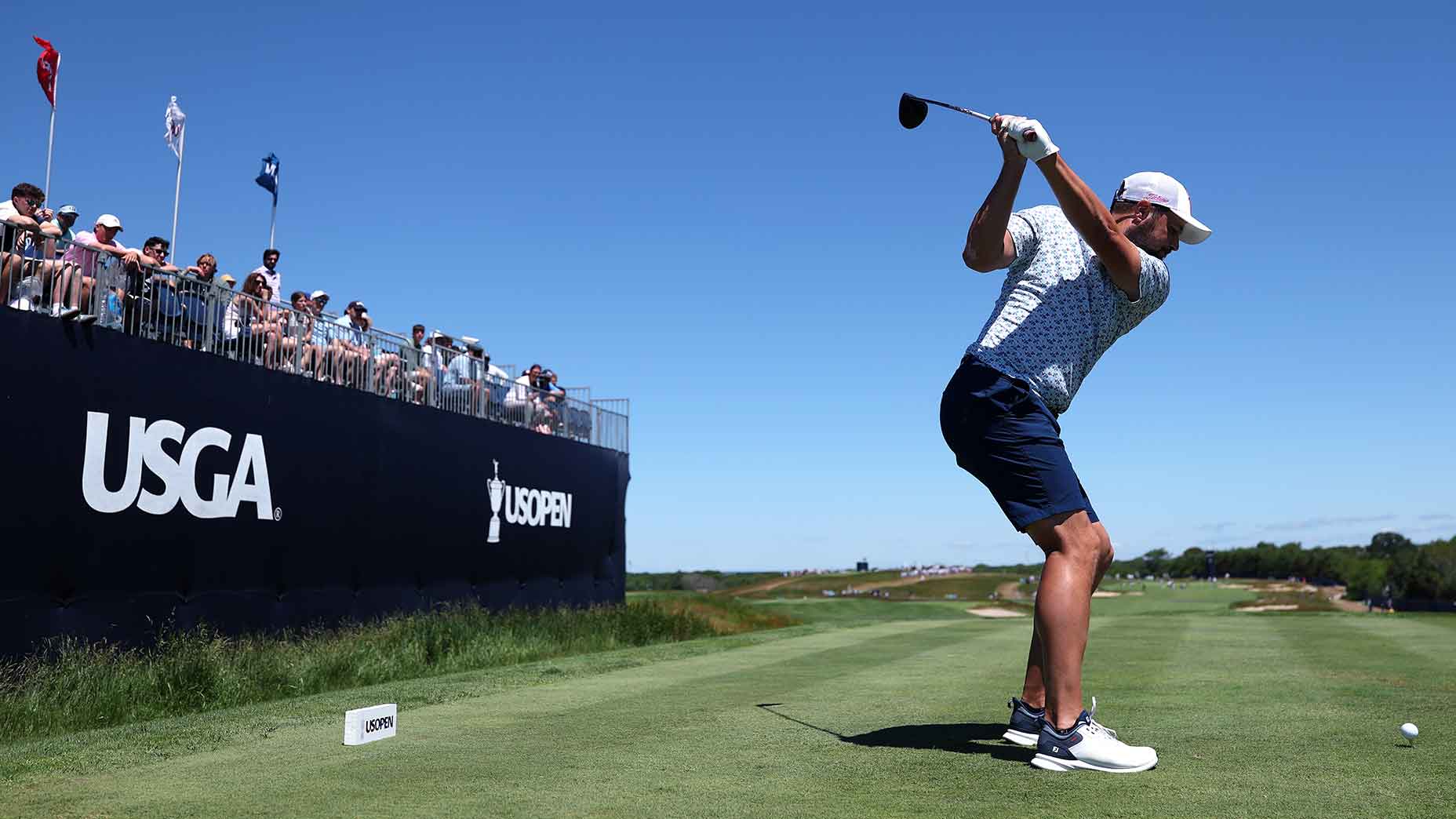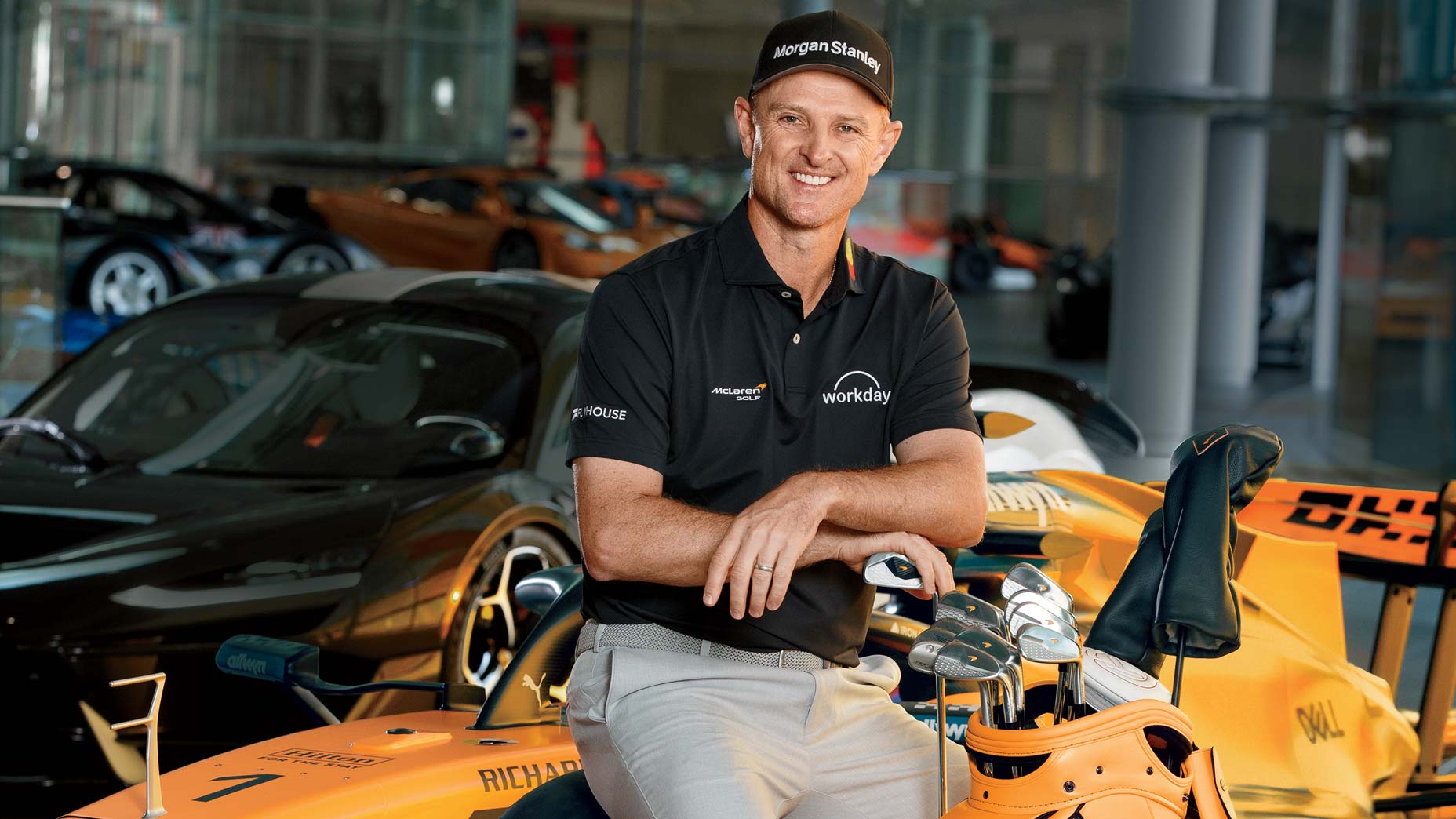
JUSTIN ROSE IS DRIVING FAST.
He should be. He’s behind the wheel of a car built for that purpose, a papaya-orange McLaren GTS, on loan for the morning. We’ve just left his house in Wentworth, a leafy enclave an hour west of London, and as we rumble out of the neighborhood and turn onto the first stretch of open road, Rose suddenly guns it, grinning as he goes.
“I feel I’m seeing every little bump in the road from an eye level now,” he says. “I’ve been driving an SUV for quite a while; it’s kind of cool to be down low again. It’s like I’m reading a putt.”
The speed surge doesn’t last long. The nearby M3 is shut down this morning, redirecting extra commuter traffic onto our route. That seems potentially problematic; Rose has an important and tightly scheduled day ahead. But as we slow to a crawl through a series of charming country towns, there’s plenty of time to look and to chat.
He points out a couple of favorite spots as we cruise through Sunningdale, home to shops and restaurants as well as the best of several excellent golf clubs in the area. We pass Rose’s grocery store, then his favorite local coffee shop.
“Traffic’s bad enough this morning we could probably pick up two flat whites and wouldn’t lose our spot,” he says, clearly tempted by the idea.
He’s glad to be home after five-plus weeks away. And even if he doesn’t have as much hardware to show for it as his last return—when he hopped home after winning the 2026 Farmers in dominant fashion, leading wire to wire and breaking Tiger Woods’ Torrey Pines tournament record at 23 under par—there’s plenty to be proud of. He’s coming off a T13 at the Players Championship, enough to retain his spot at No. 5 in the Official World Golf Ranking, an impressive feat for any player but especially so for one in his 28th year of professional golf.
ROSE IS THE FIRST to bring up his age. I’d been determined not to lead our conversation with it, because the idea that Rosey is playing well for his age diminishes just how well he’s playing, period.
He mentions it in the context of recovery. That’s where he feels the effects of his 45 years. He knows he can’t just hop off a plane and go play 18 holes. He can’t skip that workout, that training session. His decked-out RV—which he calls his “recovery vehicle” and features a hot plunge, cold plunge, sauna, steam shower, red-light bed and more—meets him at tournaments and is central to his entire approach: There are no shortcuts anymore.
“I’m definitely rededicated,” he says. “I’m doing a lot of things that are making me feel ageless, but at the same time I’m probably doing well because there is a sense of urgency knowing that time is of the essence. So, it’s sort of a double-edged sword, really.”
Rose is the third-oldest full-time PGA Tour player this year, but he doesn’t move like it or play like it. He’s added speed in the offseason, picking up distance as he tries to keep up with the younger set—and tries to keep up with a contemporary too.
“Adam Scott and I are two weeks apart in age,” he says with envy and admiration. “We’ve had very, very comparable careers. He’s a great friend of mine, tons of respect for him. But I look at him and I think, Damn, he moves better than I do. He’s faster than I am. But he’s a benchmark.”
Justin and his wife, Kate, have two kids: Leo, 17, and Lottie, 14. Their schooling and upbringing is a large reason the Rose family returned to the UK after the better part of two decades in the U.S. and the Bahamas, even though it makes his work travel decidedly less convenient. (There’s another reason, too: “I’ve never liked being around Tour players,” he says. “I’m around them so much when I’m playing that my weeks at home—I quite like to get away and just do my own thing and practice and not see 10 of the guys.”)
At home Rose’s pastimes revolve around his kids and their sports. Another recent priority: a run of college tours with Leo.
For Rose, that represents a road not taken. When Rose was Leo’s age, he introduced himself to the world at the 1998 Open Championship, jarring a 50-yard wedge shot on his 72nd hole to finish T4, an unthinkable result for an unheralded amateur.
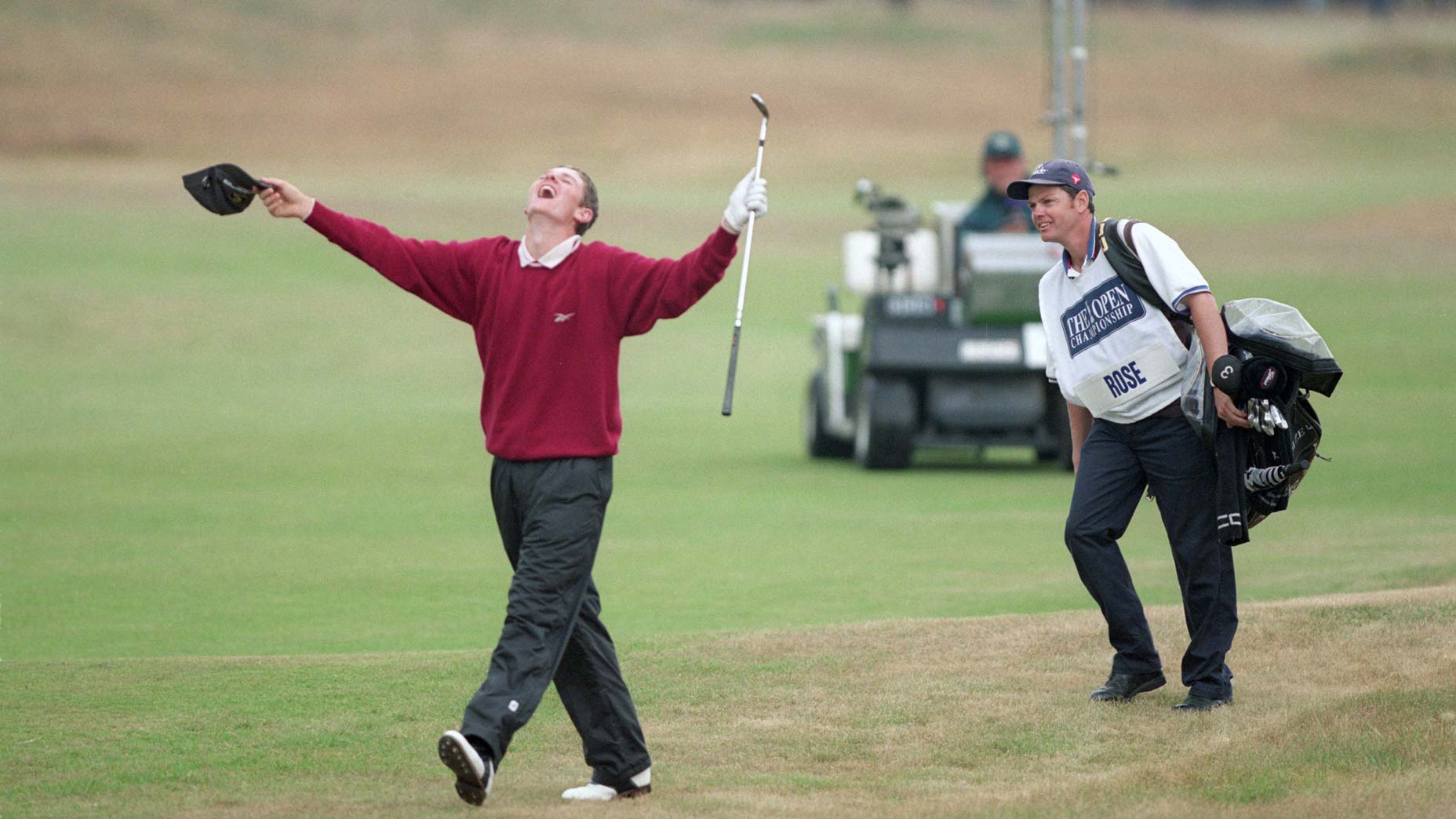
He turned pro the following week, and once he got through an initial rough patch (Rose’s 21 missed cuts have become part of his mythology) he settled into his role as one of golf ’s most steadfast characters.
“When I look at it in totality, I’m like, Wow, 28 years. That feels like it’s flown by,” he says. “But then if I break it down, I’m like, Oh, I’ve been through so much.”
These days his superpower lies in maximizing the weeks when he has his good stuff. That’s how he won at Pebble Beach in 2023, how he won the FedEx St. Jude Championship in 2025, how he charged to runner-up finishes in back-to-back majors at the 2024 Open and 2025 Masters, and how he played a starring role in Team Europe’s two most recent Ryder Cup victories.
“I still have this belief that I can be better tomorrow than I am today, which is—that’s the only reason I’m playing, you know?” Rose says. “I’ve got no real need or urge to play the game just for playing’s sake. I want to play to compete and play to be elite and to create those memories that come along with being elite, playing in the biggest tournaments on the biggest stages. That’s still why I play.
“Other than that,” he says, smiling broadly, “I’ve got better things to do.”

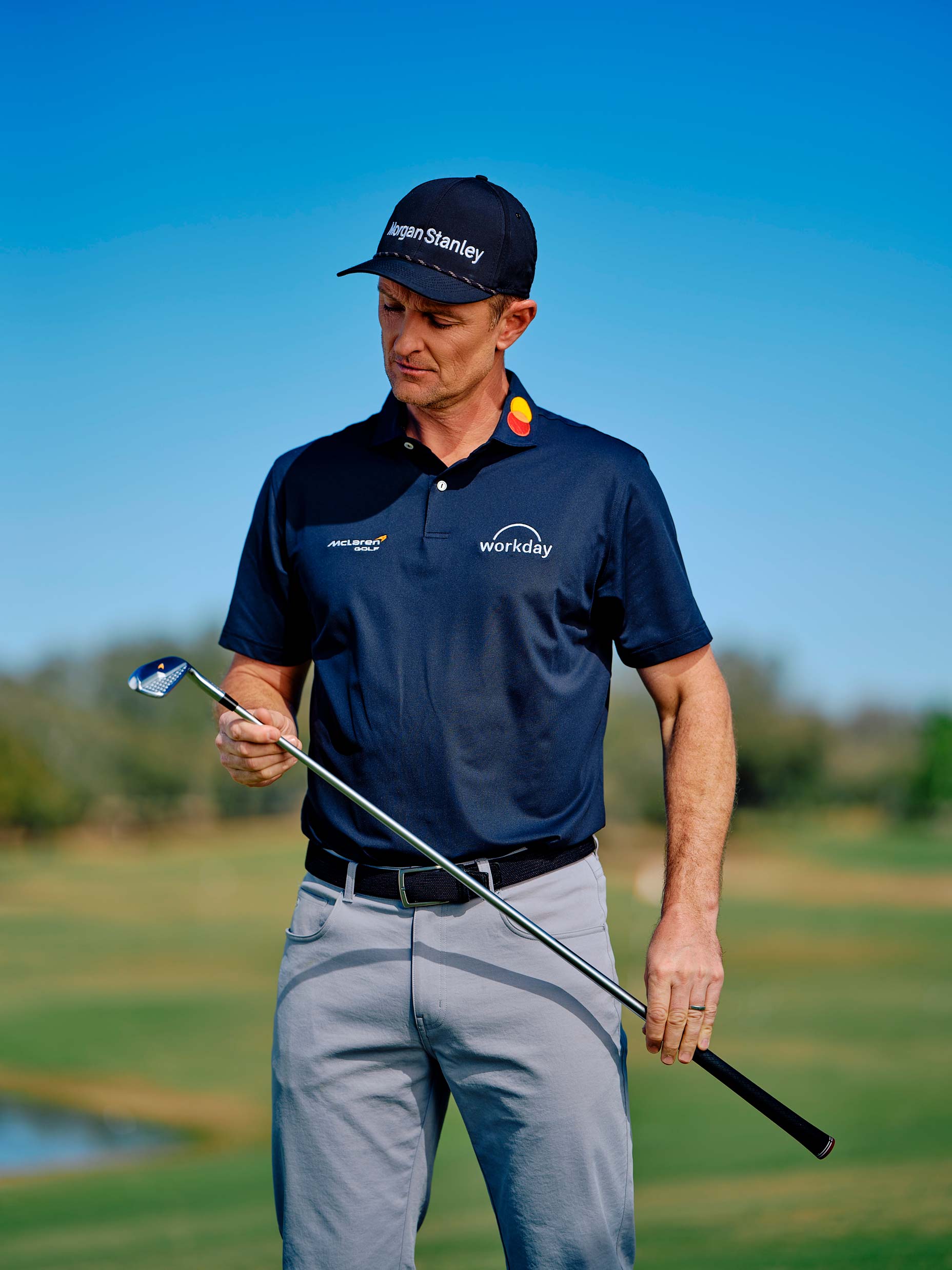
THERE’S A REASON we’re in a McLaren. It’s the same reason Rose does just about anything: He’s looking for an edge.
Just five miles southeast of Rose’s house, we pass through a security gate and down a VIP entrance to the front of the McLaren Technology Centre, where this car lives when it’s not on loan. This is where it all happens: where McLaren builds its F1 cars and super cars, where the majority of its employees work, where eras of race cars and trophies line the entryway, reminding insiders and outsiders of the brand’s pedigree. There are rumors of underwater roads and hidden passageways. Driving into the place, I understand why.
The MTC’s massive, bending glass facade is reflected in the large lake beside it, and the lake reflects in the glass. The building’s bright, futuristic feel has made it a popular filming location for everything from the Star Wars prequel Andor and a Fast and Furious spin-off to F1, the Brad Pitt–starring 2026 Best Picture nominee.
Rose has been friendly with McLaren and two of the faces of its racing division—CEO Zak Brown and reigning world champion driver Lando Norris—for years. They have overlapping interests: the car guys’ love of golf and the golf guy’s love of cars. But behind the scenes they’ve been working on a project that, on this late-March day, is a month from its April 29 unveiling. McLaren Golf, a new division of the company, promises to “push the boundaries of equipment design and manufacturing,” and as Rose parks the GTS in front of the MTC, a high-powered envoy awaits the face of its new venture.
Rose’s arrival—and, more broadly, McLaren Golf ’s launch—has brought together the entire company, including its automotive and racing divisions. Brown is there to greet Rose, as is McLaren Automotive CEO Nick Collins, with newly minted McLaren Golf CEO Neil Howie by their side. There are handshakes and laughs, then photographs (including this magazine’s cover image) are taken. Soon, Rose is shuttled down a hallway, where Brown and Collins join him for a Q&A in front of several hundred golf-mad McLaren employees. It’s a sign of the internal interest in this project—and a spur for some obvious questions: Why is McLaren choosing to enter the golf space? Why is McLaren choosing Justin Rose as a partner? And why is Justin Rose choosing McLaren?
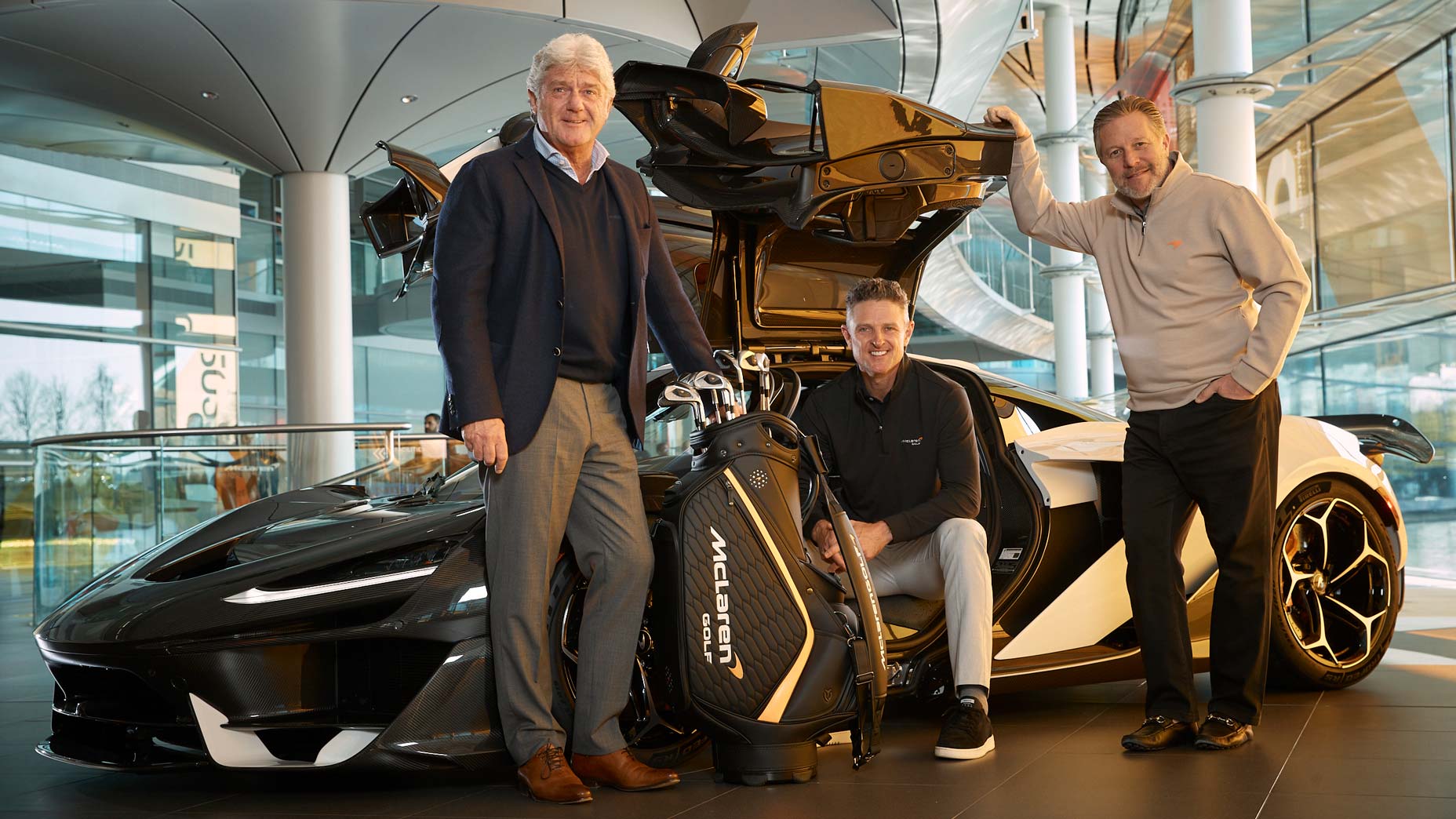
MAKING HIGH-END GOLF CLUBS really isn’t much of a leap, Brown says. The Q&A has wrapped, and we’ve shifted to a back room accessed via a hidden doorway. (Really.) Although he’s a famously busy executive, Brown seems unhurried as he lingers in this golf corner of his world, querying Rose about the role of a caddie, the mental demands of the game and how he steadies himself over a critical three-footer. With some coaxing, Brown gets to the essential why of this new foray. Simply put: McLaren is extremely good at making stuff.
“I think there are a tremendous amount of synergies around the technology of golf equipment and Formula One equipment,” he says. “Materials, aerodynamics, compression, light-weighting, sensors, all of which go into playing golf. I think both sports are all about precision.”
Howie, a longtime Callaway exec, explains how McLaren has gotten to this point. They began by hiring “massively qualified golf engineers” who’ve come from the big-time golf brands you’d expect. But they’ve put them in close contact with the McLaren Racing Accelerator team, a group designed to think outside the box and eager to lend their skills to pretty much anything. In this case, clubs intended to compete with the game’s most premium brands. Howie illustrates the engineers’ open-mindedness by recounting the first thing one asked him:
“Does the shaft have to be round?”
He laughs at the memory. “It’s the sort of question a golf engineer would probably never ask,” he says.
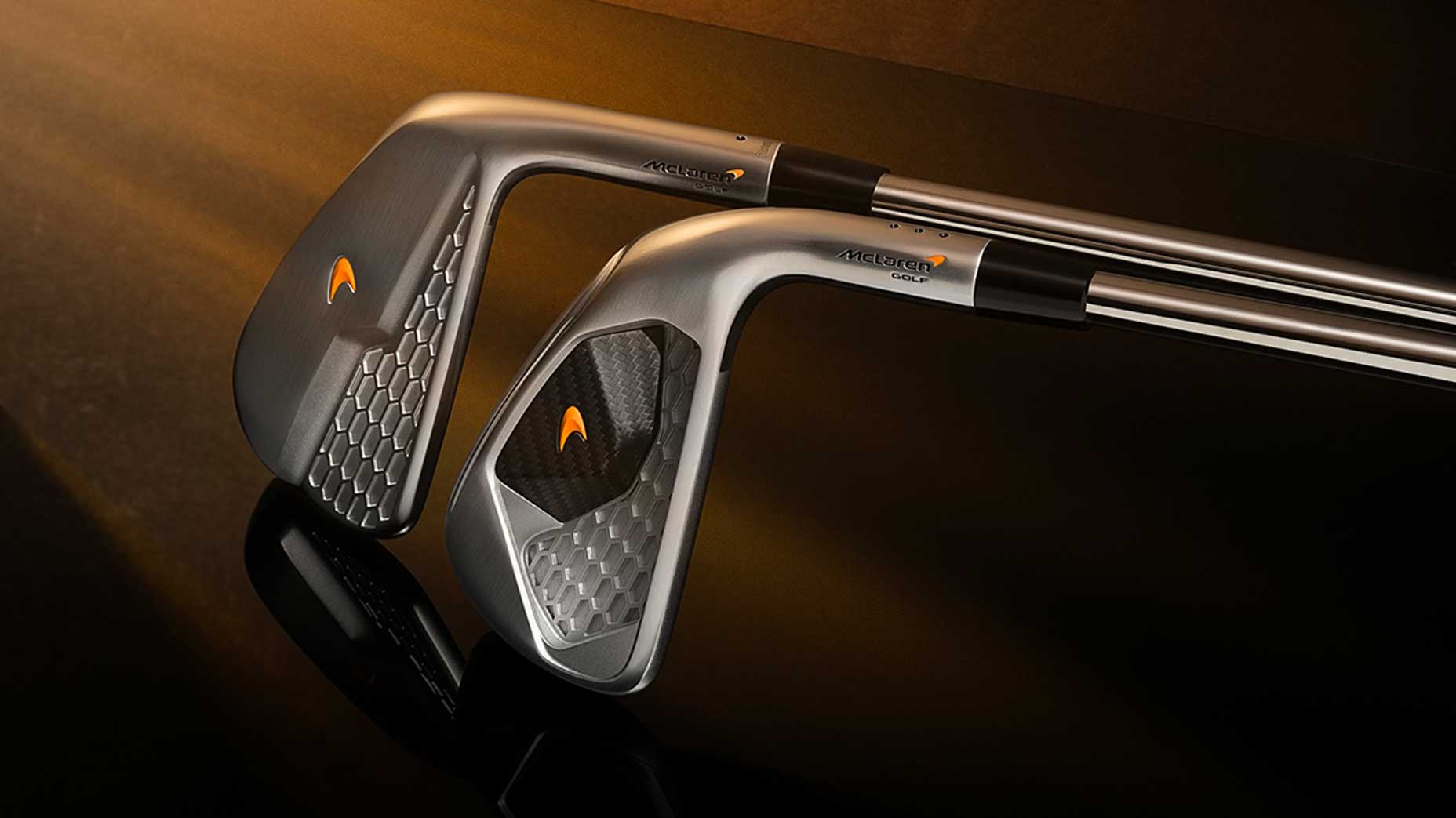
It’s a compelling proposition: Golf know-how meets engineering genius to challenge the status quo. The message they keep hammering home is that this has never been tried before. Other brands in the F1 space have slapped logos on clubs in licensing deals, but it’s a point of emphasis that this is not that. Whatever happens with McLaren Golf, it won’t fail for lack of effort.
As for Rose? He’s wearing several hats in this endeavor, from investor to test dummy.
“It’s a great opportunity to come to market with a whole new way of making clubs,” he says, “through metal-injection molding, where we can really control the quality of the build, the quality of production, the quality of the feel and the quality of the end product we deliver to the consumer.”
He’s been deeply involved for close to two years now, testing prototypes, advising on club design and even attending board meetings. It’s starting to feel real now—even more so as he walks around headquarters in McLaren gear.
“Especially through the testing process, I’ve started to really understand where some clubs are great and where I struggle with others,” Rose says. “So I think there’s been a lot of learning for me over the last five years, and that’s why I feel like this is a really good time for me to put down on paper all of my wishes and all the things that are important to me, which, in turn, I hope will be good for all golfers.”
But as multilayered and rigorous as the testing has been, one aspect of the process isn’t nearly as complex as you’d think.
“Ultimately, once you hit a club that’s better, you know pretty much straightaway,” Rose says. “Then there’s just that final piece of the puzzle, which is putting them in play on a golf course. You have to hit half-shots and sawed-off shots and knock it down with some draws and fades.”
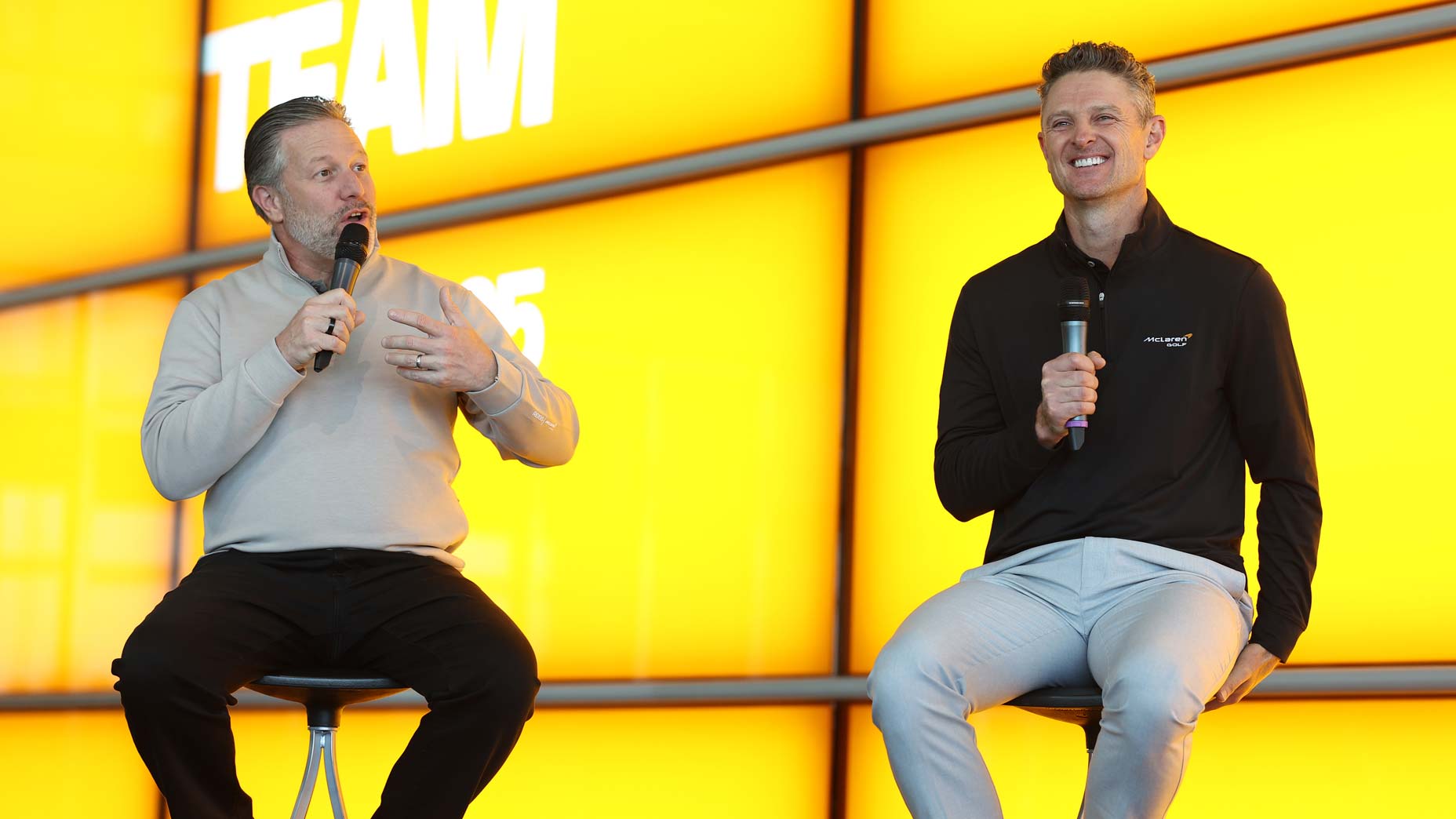
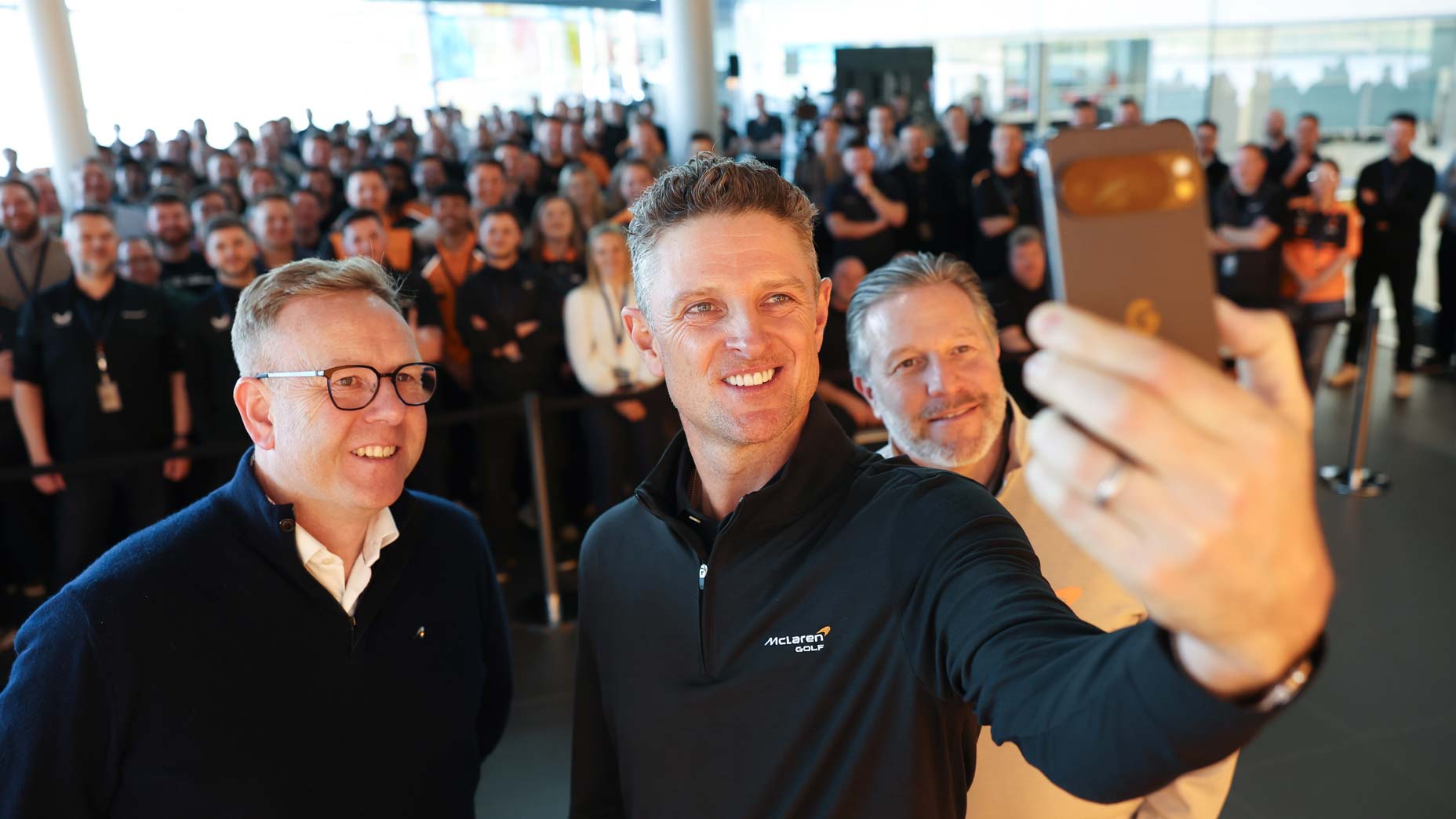
CEO Collins emphasizes the brand’s engineering advantages, its proprietary techniques, its computer simulations, its knowledge of material science. “We don’t do anything by half,” he says. “When McLaren does something, we go out to do it properly. And by properly we mean to go and win.”
That explains why McLaren chose golf clubs. As for why it chose Rose? Each CEO sings his praises, but the simplest answer is this: Justin Rose is McLaren. He’s English, he’s old, he’s new, he’s timeless, he’s cutting-edge—and desperate to stay at the top of his game. It’s tough to imagine a better fit.
That partnership will be consummated in early May, when Rose puts McLaren’s irons into play on Trump Doral’s Blue Monster, at the Cadillac Championship in Miami. In F1 terms, it’s “lights out”—and Rose is hoping for the same.
THESE DAYS, ROSE doesn’t play much golf for fun, he says. He’s obsessive with time management, especially with his kids still in school. Golf is his job and he metes out his hours accordingly. But even as he says that he corrects himself in real time.
“I still do love going out in the evenings and playing golf by myself,” he says. “That’s sort of my marker for whether I’m in a good place mentally. Carrying my own clubs, those long evening shadows—I absolutely love it.”
Last fall, three days after the mayhem at the Bethpage Ryder Cup, Rose felt that calling. He slung his clubs on his shoulder and headed out for a loop.
“I went and walked and played, and I was like, Man, that was so fun. That was as much fun as playing in all that chaos,” he says. “It’s kind of like a cleanser.”
At the risk of flattery, I float the idea that there’s a bit of James Bond in Rose, a cold-blooded individualist obsessed with innovation and edge but convinced that some of the old ways still work best. Rose shrugs.
“My wife wouldn’t mind if that was the case,” he says. “Me a little more Daniel Craig, walking out of the ocean in a pair of trunks.”
Rose is still chasing moments. He keeps finding them and chasing more. We printed out photographs from 10 particularly meaningful ones: that Open Championship in 1998; his 2002 British Masters, his only win in front of his dad; his 2013 U.S. Open win at Merion, where he pointed to the sky on Father’s Day; Olympic Gold in 2016; a Masters near-miss in 2025; Ryder Cup wins spanning 11 years; and more.
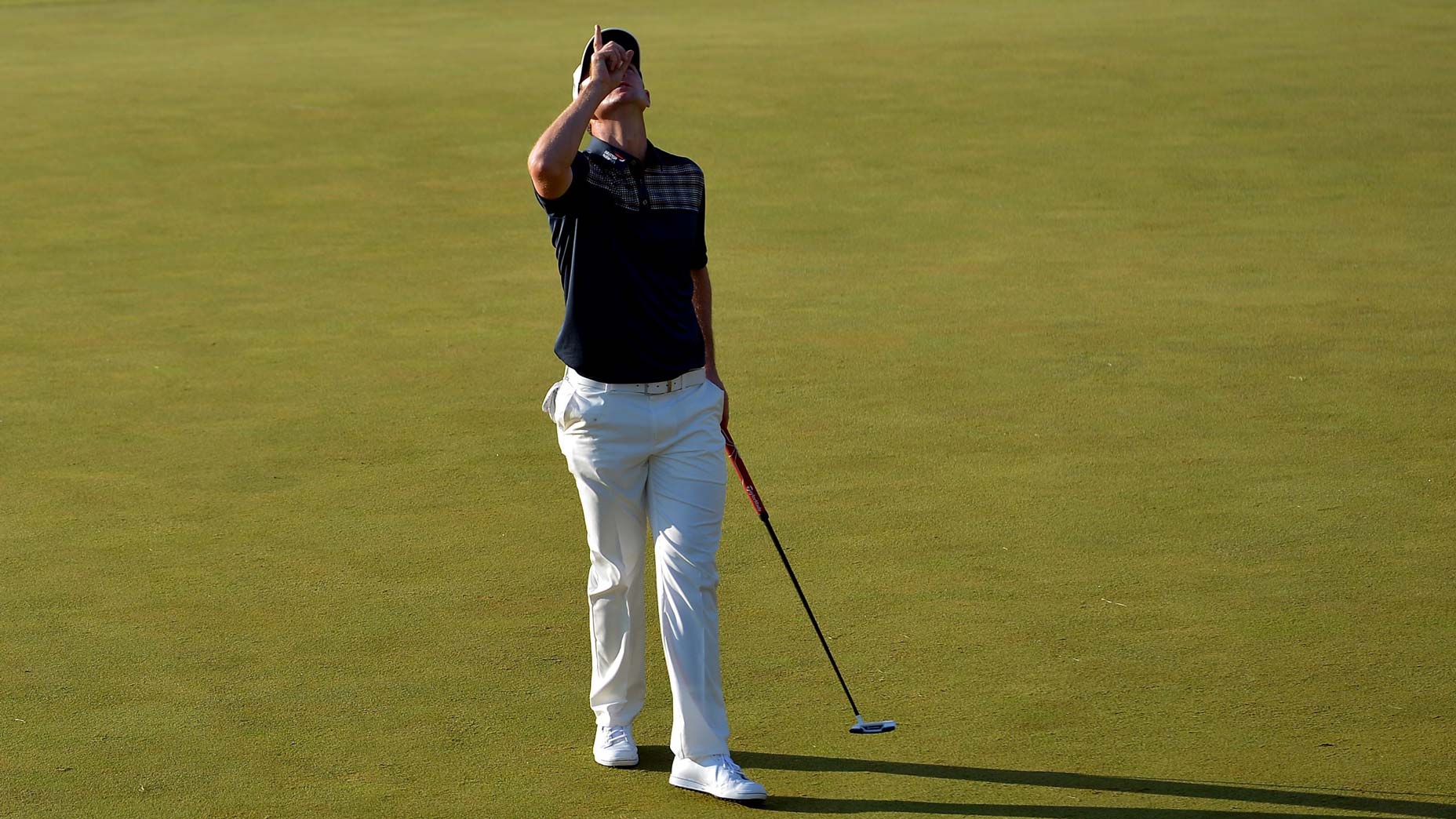

He lets the final question—What photo will come next?—linger.
“I’d love to win another major,” he says after a moment. He’s said this before, of course, but it still seems brave to put that out there, knowing it may never happen.
His best chance yet comes three weeks after we chat, when he leads the Masters on Sunday’s back nine—before it slips through his grasp. But Rose is already looking ahead anyway. This summer, the Open returns to where it all began for him: Birkdale.
So, about that next photo?
“If I could be super greedy, I would probably go so far as to say the Open at Royal Birkdale,” he says. “I just think the kid that chipped in all those years ago—to get it done at this stage in my career? That would be probably the best story you could hand me.”
The lofty goal and the courage to pursue it. It’s very Rose. There’d be something fitting about his life looping back around. Where he’s been is where he’s going.
Like a golf course.
Or a racetrack.
Dylan Dethier welcomes your comments at dylan_dethier@golf.com.